

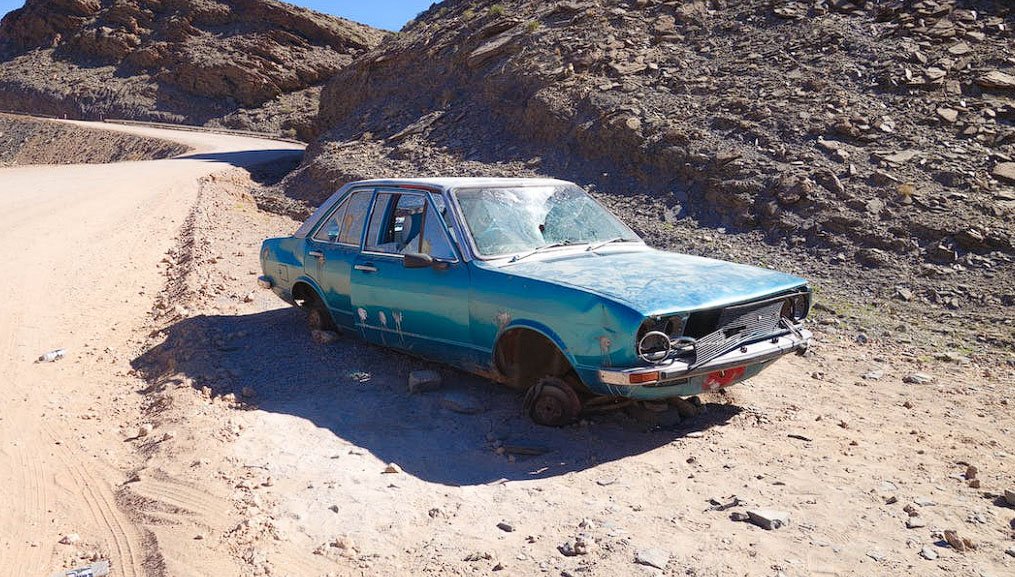
You can sometimes sell a junk car without a title, but there is no nationwide rule that makes every no-title sale legal. Your state may require a duplicate title, accept registration plus an affidavit, or create a limited exception for an older low-value vehicle sold to a licensed dismantler.
You must prove that the vehicle is yours and meet the motor-vehicle agency’s rules, regardless of what a buyer says.
Start with the reason the title is missing
A lost paper title is usually the simplest case. The titled owner can request a duplicate from the state that issued it. An electronic title may only need to be printed or released through the motor-vehicle agency.
Other situations need different paperwork:
| Situation | Likely next step |
| Title lost or damaged | Apply for a duplicate title |
| Lender still listed | Obtain a lien release before selling |
| Owner has died | Use estate or small-estate documents required by the state |
| Car bought but never transferred | Contact the previous owner or follow the state’s bonded-title process |
| Abandoned car on your land | Use the local abandoned-vehicle procedure; possession alone is not ownership |
Before paying a duplicate-title fee, estimate the vehicle’s complete value. RecycleFind’s junk car value tool gives you a starting figure based on the vehicle, condition and scrap market, which helps you judge whether waiting for a replacement title could produce a better offer.
Check the rule for the state where the car is titled
Search the official DMV, BMV, MVD or department of revenue website. Look for “duplicate title,” “junk vehicle,” “dismantler” and “vehicle sold without title.” A buyer’s advertisement is not a substitute for the state rule.
State exceptions can be surprisingly narrow. New York, for example, publishes Form MV-35 for certain vehicles worth $1,250 or less that are eight model years old or older when sold to a registered dismantler or scrap processor. That does not mean every untitled vehicle in New York qualifies. The age, value, buyer type and required seller statements all matter.
If the vehicle came from another state, call the agency that issued the last title. Your current state may not be able to create a clean record from incomplete out-of-state paperwork.
Documents a legitimate buyer may request
Even where a no-title transaction is permitted, expect the buyer to identify you and the vehicle. Gather:
- Government-issued photo identification
- Current or expired registration in your name
- The 17-character VIN and a clear photograph of the VIN plate
- A prior bill of sale
- Insurance or tax records linking you to the vehicle
- A lien-release letter, if a lender once held the title
- The state’s ownership affidavit or junk-vehicle form
The VIN on every record must match the car. Stop if a plate appears altered, missing or inconsistent. A licensed yard will not solve an ownership dispute by towing the evidence away.
Which buyers may accept a no-title car?
Licensed vehicle dismantlers, auto recyclers, salvage yards and specialist junk-car removal companies are the usual options. Their authority and paperwork differ by state. A general scrap-metal yard may accept loose metal yet refuse a complete vehicle because a car carries a titled identity.
Ask each buyer four questions before comparing prices:
- Are you licensed to buy complete vehicles in this state?
- Which exact documents will you accept instead of the title?
- Is towing included in the quoted amount?
- Which receipt or state form will I receive?
Get the final offer and conditions in writing. A quote that falls sharply when the tow truck arrives is not a useful quote.
When a duplicate title is the better route
A replacement title usually expands the buyer pool. It may also improve the offer because the buyer takes on less administrative risk. Check the official fee and processing options before assuming the delay will be long; some states offer online requests or expedited service.
Do not pursue a duplicate while an unresolved lien remains. Contact the lender or its successor and request a formal release. If the lender no longer exists, the state agency can explain its evidence requirements.
A bonded title can solve certain broken chains of ownership, but bond premiums, inspections and waiting periods may make it poor value for an ordinary scrap car. It fits unusual vehicles better than a badly rusted sedan with little parts demand.
Complete the handover cleanly
Remove personal property, toll tags and plates. Whether plates stay with the seller depends on state law, so check before the tow. Photograph the vehicle, VIN, odometer and condition at collection.
The bill of sale or receipt should show:
- Seller and buyer names
- Date, price and payment method
- Year, make, model and VIN
- Odometer reading or the applicable exemption
- Vehicle condition and “as-is” wording
- The alternative ownership document used
Never sign a blank form or leave the buyer section empty. Keep copies of every page, then submit any required notice of sale or release of liability. Cancel insurance only after the transfer and plate steps are complete.
Warning signs around no-title offers
Walk away from a buyer who does not ask for identification, wants the VIN concealed, proposes listing a different sale price or refuses to provide a business name and receipt. The same applies to anyone who tells you to report the title lost after the car has gone.