

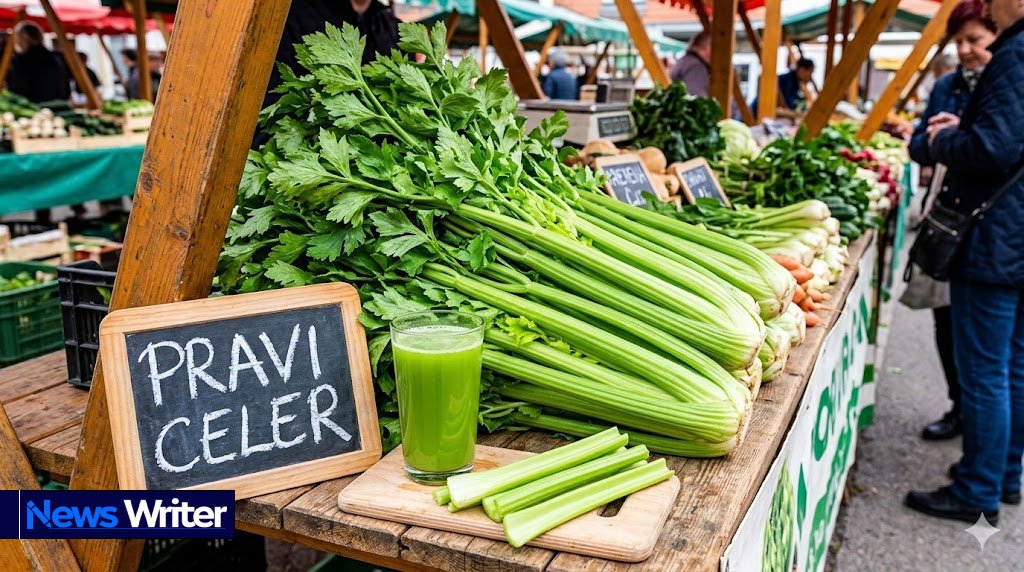
Pravi Celer is a term that comes from Slavic languages, where “pravi” means true or real, and “celer” means celery. This phrase describes celery in its most natural and complete form, including the stalks, leaves, roots, and seeds. Unlike the pale and mild celery you find in most supermarkets today, pravi celer refers to traditionally grown celery that keeps all its original flavour and nutrition. People in the Balkans and Eastern Europe have used this vegetable for generations in their cooking and home remedies. They believe in its power to clean the body and support good health. This guide will help you understand what makes pravi celer special and why it deserves a place in your daily meals.
The Rich History Behind True Celery
Celery has a very long history that goes back thousands of years. In Homer’s Iliad, the horses of the Myrmidons graze on wild celery that grows in the marshes of Troy. In ancient Egypt, celery leaves were part of funerary garlands found in King Tutankhamun’s tomb. The ancient Greeks gave celery a special place in their culture. The Greeks used it in culinary practices and crowned winners of the Nemean and Isthmian games with celery wreaths.
Prior to the 16th century, the celery plant was used more as a medicine than a food. People valued it for healing before they started eating it as a vegetable. In France in 1623, use of celery as food was first recorded. Before this time, doctors and healers used celery seeds and leaves to treat many health problems. Celery seeds, leaves, stem, and root are used in a variety of traditional medicine systems, including the Unani tradition of ancient Persia and Arabia, Indian Ayurveda, and Chinese herbal medicine.
In the Middle Ages, celery was used mainly as medicine. Herbalists recommended it to calm nerves, promote sleep, and aid digestion. This shows that people understood the healing power of celery long before modern science could explain it. The Romans also had interesting beliefs about celery. They thought it could help with hangovers and stomach problems. This long history of use as both food and medicine makes pravi celer a truly remarkable plant.
What Makes Pravi Celer Different
The main difference between pravi celer and regular supermarket celery lies in how people grow and use it. Commercial celery is often bred to look perfect and last longer on store shelves. This process sometimes reduces its taste and nutritional value. Pravi celer, on the other hand, grows using traditional methods that focus on keeping the plant’s natural properties.
When you use pravi celer, you use the whole plant. This means you eat not just the stalks but also the leaves, roots, and seeds. Each part offers different benefits. The stalks give you crunch and water. The leaves add flavour to soups and stews. The root, also called celeriac, provides an earthy taste perfect for roasting. The seeds work as a spice with a warm, slightly bitter flavour. This zero-waste approach matches how families in Eastern Europe have used celery for many generations.
Nutrition Facts and Health Benefits
Apium graveolens is known to contain essential nutrients such as vitamins A, K, and C, as well as minerals like potassium and folate. These vitamins and minerals support many body functions. Of minerals, sodium, potassium, magnesium, calcium, and vitamins such as beta carotene and vitamin C are available in celery. In addition, this herb contains a high amount of fiber.
One of the most notable things about celery is its water content. The plant contains about ninety-five percent water, making it excellent for staying hydrated. This high water content also means celery is very low in calories, which makes it a perfect food for people watching their weight.
Celery, because of compounds such as caffeic acid, p-coumaric acid, ferulic acid, apigenin, luteolin, tannin, saponin, and kaempferol, has powerful antioxidant characteristics to remove free radicals. These antioxidants help protect your cells from damage. They may also help reduce inflammation in your body. The phytochemicals in celery decrease the activity of proinflammatory cytokines and prevent inflammation.
Research has shown several potential health benefits. Celery phthalides lead to expanding of smooth muscle in the blood vessels and lower blood pressure. This makes celery a food that may help people with high blood pressure. The fibre in celery also supports healthy digestion by helping food move through your system smoothly.
Traditional Uses in Folk Medicine
Traditionally, celery has been utilized to treat various conditions such as arthritis, gout, urinary infections, and menstrual disorders. People have trusted celery as a natural remedy for centuries. Celery seed has traditionally been used as a diuretic and an anti-inflammatory remedy for such ailments as rheumatism and gout.
In Slavic culture and Balkan traditions, families have brewed teas from celery roots and leaves to support digestive health and help the body remove toxins. They often combined celery with garlic, onions, and other vegetables to create warming soups and stews. These recipes passed down through generations carry both cultural meaning and practical health benefits.
Historically, celery was valued for its diuretic, anti-inflammatory, and digestive properties. A diuretic helps your body remove extra water and salt through urine. This can be helpful for reducing bloating and supporting kidney function. The anti-inflammatory properties may help with joint pain and swelling.
How to Use Pravi Celer in Your Kitchen
Using pravi celer in your cooking is simple and rewarding. You can eat the stalks raw as a crunchy snack. They pair well with hummus, peanut butter, or cheese spreads. The stalks also add a fresh, mild flavour to salads when sliced thin.
For cooking, celery works wonderfully in soups and stews. Many classic recipes start with a base of celery, onions, and carrots. This combination creates a rich, deep flavour that forms the foundation of countless dishes. The French call this mixture mirepoix, and cooks around the world use similar combinations.
Celery juice has become popular among health-focused people. You can make it by blending fresh celery stalks and straining the liquid. Some people drink it first thing in the morning on an empty stomach. The juice offers a concentrated dose of vitamins and minerals, though it removes the beneficial fibre found in whole celery.
The leaves of pravi celer deserve more attention than they usually get. Instead of throwing them away, chop them finely and add them to salads, soups, or pasta dishes. They have a stronger flavour than the stalks and can replace parsley in many recipes. The root, or celeriac, can be roasted, mashed, or added to soups for a hearty, earthy taste.
Modern Research and Scientific Studies
Phytochemical studies have discovered numerous bioactive compounds in Apium graveolens, such as flavonoids, phenolic acids, coumarins, and essential oils, all of which play a role in its extensive pharmacological effects. Scientists continue to study these compounds to understand exactly how they work in the body.
The most active ingredients in celery have shown hypolipidemic, antidiabetic, and hypotensive properties. Hypolipidemic means they may help lower fats in the blood. Antidiabetic suggests possible benefits for blood sugar control. Hypotensive refers to the ability to lower blood pressure.
Conclusion
Pravi celer connects us to food traditions that have nourished people for thousands of years. This natural, whole form of celery offers a way to enjoy better nutrition while respecting the plant’s full potential. Whether you eat it raw, cook it in soups, or juice it fresh, pravi celer brings value to your table and your health.
Frequently Asked Questions
What does pravi celer mean?
Pravi celer is a Slavic phrase that translates to “true celery” or “real celery.” It describes celery in its natural, complete form with all parts of the plant used for cooking and health purposes.
Is pravi celer different from regular celery?
Both come from the same plant species called Apium graveolens. The difference is in how people grow and use it. Pravi celer focuses on traditional growing methods and uses every part of the plant, including stalks, leaves, roots, and seeds.
What are the main health benefits of celery?
Celery contains vitamins A, K, and C, plus minerals like potassium and folate. It may help support hydration, digestion, and heart health due to its high water content, fibre, and natural compounds that reduce inflammation.
Get verified insights on News Writer