
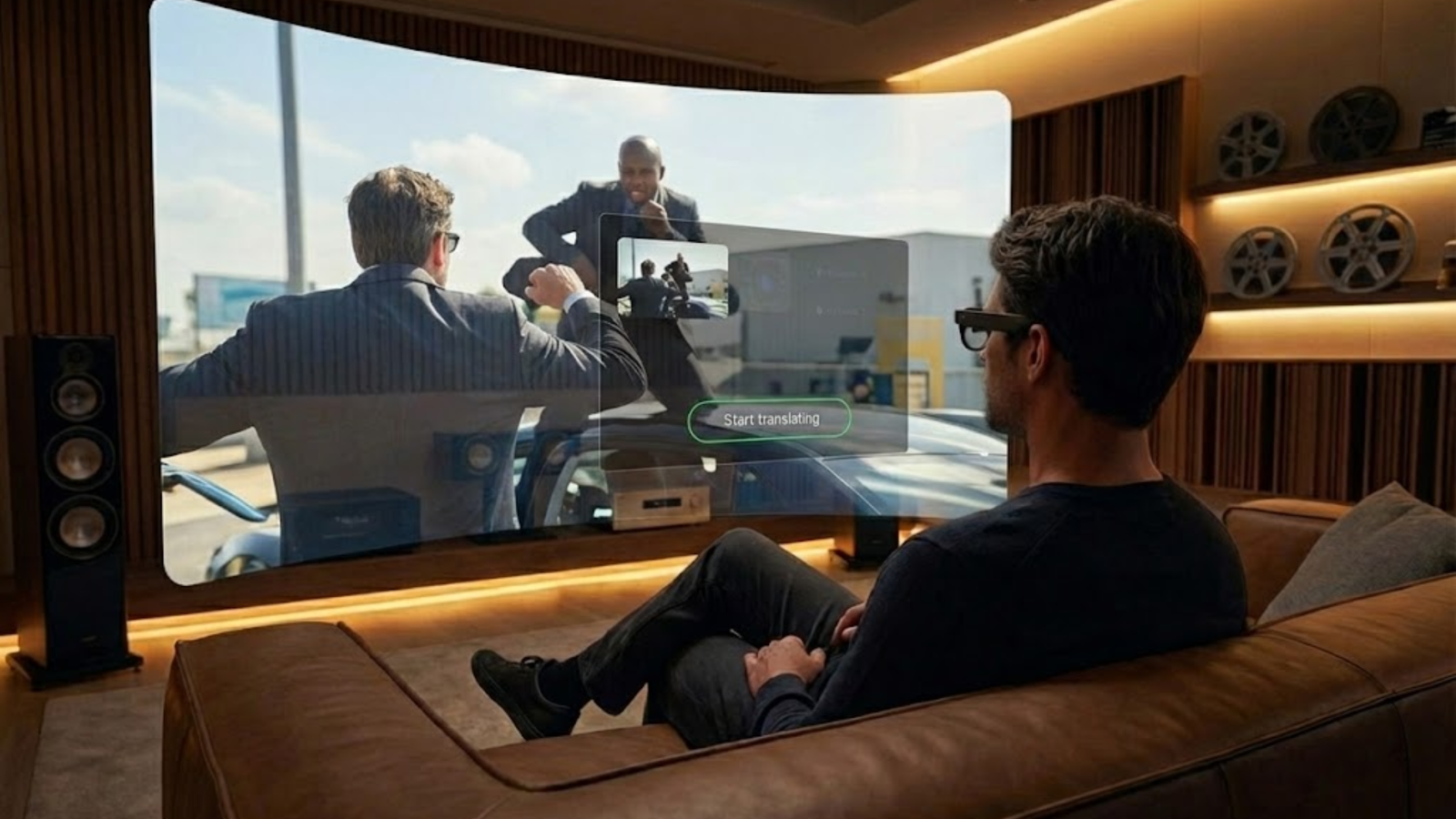
For buyers, the market for AR glasses often feels split between camera-first AI models and display-first wearable screens, though hybrid versions are emerging. The gap between these product types keeps widening as manufacturers target different use cases in 2026.
The RayNeo Air 4 Pro sits in the display camp. Priced at $299 and weighing 76 grams, the device was one of the first display glasses to bring native HDR10 to the sub-$300 tier on dual Micro-OLED panels.
This review-style overview covers display performance, audio, build quality, and real-world utility based on official specifications, third-party reviews, and user feedback across everyday scenarios like travel, console gaming, and media streaming.
Why HDR10 Matters for Wearable Displays
Many wearable display glasses still rely on SDR output, especially in lower price tiers. Compared with HDR, SDR works within a narrower brightness and color range. HDR10 combines 10-bit color with HDR metadata to preserve more highlight and shadow information.
Among display-first AR Glasses in 2026, the RayNeo Air 4 Pro remains one of the most affordable ways to get native HDR10 support. Some competing display glasses prioritize wider FOV, 3DoF tracking, or electrochromic dimming rather than HDR10 at this price point.
The practical difference hits hardest in dark scenes where shadow gradations hold together instead of collapsing into gray. Bright highlights retain detail without clipping. For any content mastered in HDR, the improvement becomes visible almost immediately.
Inside the Display Stack
The display system combines dual Micro-OLED panels with a dedicated processing chip. This hardware combination is consistent with Tom’s Guide’s assessment of the Air 4 Pro as a strong, budget-friendly AR glasses option for everyday entertainment.
Dual Micro-OLED Panels
Each eye sits behind a 0.6-inch SeeYa Micro-OLED running at 1920 × 1080 resolution. Together they project a 201-inch virtual screen at six meters, roughly comparable in perceived screen size to a large projected image, though limited by fit.
Brightness and Contrast
The RayNeo Air 4 pro pushes 1,200 nits. While premium competitors focus on wider FOV or spatial features, and newer entry-level rivals advertise brighter HDR10 displays, RayNeo offers a strong mix of brightness, audio, and sub-$300 pricing.
Color Fidelity
The panel covers 98% of the DCI-P3 gamut at 10-bit depth with a measured Delta E below 2. For a sub-$300 wearable display, those color specs are unusually strong and help the Air 4 Pro compete visually with many higher-priced display glasses.
Refresh Rate and Motion
The display supports 60Hz and 120Hz modes depending on the source device and settings. At 120Hz, motion blur drops during fast-paced gaming, maintaining edge sharpness in scenes where lower refresh rates tend to produce visible smearing.
AI-Powered Upscaling
A Pixelworks Vision 4000 chip handles real-time SDR-to-HDR tone mapping and 2D-to-3D conversion for compatible content, though streaming support and results vary. The SDR upscaling improves standard streaming content by expanding dynamic range and shadow detail without introducing distracting processing artifacts.
Build, Audio, and Comfort
The hardware surrounding the display focuses on weight and audio — two areas where many AR glasses fall short. The table below summarizes the key physical and audio specifications of the RayNeo Air 4 Pro, which weighs just 76 grams without a built-in battery.
| Spec | Detail |
|---|---|
| Weight | 76 grams (no built-in battery) |
| Weight Balance | 46.7% front / 53.3% rear |
| Audio | 4-speaker array, Bang & Olufsen co-tuned |
| Audio Modes | Whisper Mode / Surround Mode |
| Prescription Support | Magnetic Rx frame, supports up to −10.00D |
| Eye Protection | TÜV SÜD Low Blue Light + Flicker Free |
| PWM Dimming | 3,840 Hz |
76-Gram Frame
Without a built-in battery, the frame is lighter than many display-focused AR glasses, though heavier than ordinary eyewear. Rear-weighted distribution at 53.3% shifts pressure off the nose bridge, while multi-position nose-pad and temple adjustment help accommodate different face shapes.
Bang & Olufsen Spatial Audio
Four directional speakers co-tuned with Bang & Olufsen deliver spatial sound with two dedicated modes. Whisper Mode uses phase cancellation to contain leakage, which reviewers note works well in shared cabins. An optional Sound Tube accessory is sold separately for directed audio.
Prescription and Eye Safety
The device supports magnetic prescription inserts through compatible lens providers, accommodating up to −10.00D myopia. The display runs at 3,840Hz PWM dimming with TÜV SÜD certification for low blue light and flicker-free operation, reducing eye strain during viewing.
Where It Performs Best
The RayNeo Air 4 Pro delivers its strongest value in the specific scenarios where display-first AR glasses make the most sense — situations that combine HDR10 display quality, lightweight 76-gram portability, and USB-C plug-and-play connectivity. Three main use cases are highlighted by user feedback:
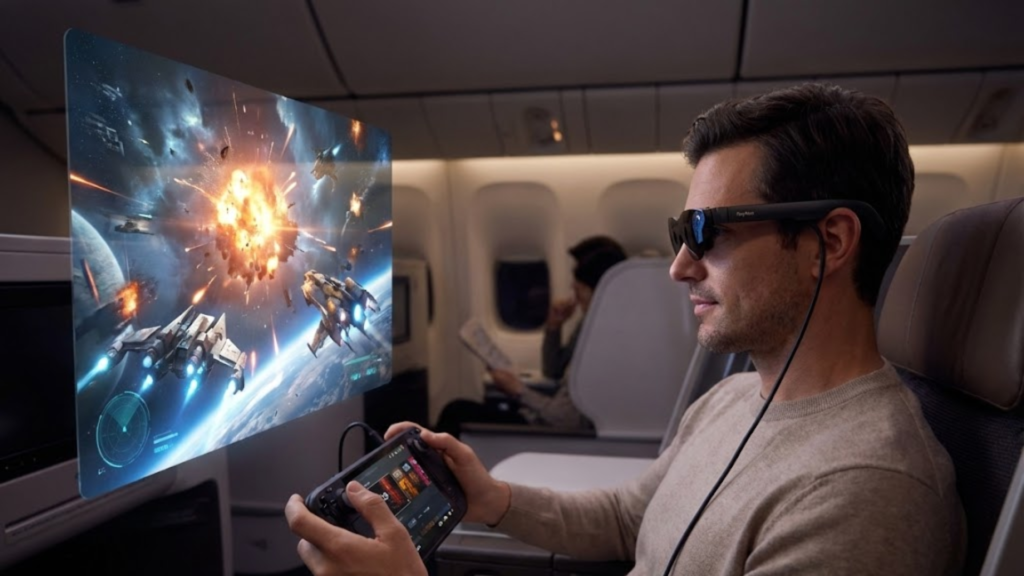
- Portable gaming — paired with a Steam Deck or ROG Ally, the 201-inch virtual screen and 120Hz refresh make handheld play feel more immersive while keeping the head in a neutral position
- In-flight entertainment — at 76 grams, the glasses add negligible weight to a carry-on, and Whisper Mode keeps audio private in tight cabin seating
- Bedside streaming — watching content while lying flat eliminates the neck and arm strain of holding a phone overhead or propping up a tablet
Gaming Setup
Connected to a Steam Deck or ROG Ally via USB-C, the RayNeo Air 4 Pro’s 120Hz panel handles fast-paced titles with minimal motion blur while HDR10 adds visible depth to darker game environments. The neutral head position eliminates the neck fatigue that builds during long sessions hunched over a small handheld display.
Travel and Daily Use
For travel, the Air 4 Pro functions as a private screening room in cramped cabin seats. Snap-on light shields block ambient light and prevent screen washout. With USB-C devices that support DisplayPort output, it requires no external adapters or companion apps for basic mirroring.
What You Give Up at $299
No wearable display at this price point ships without compromise. AR glasses priced at $299 make deliberate trade-offs against features found in premium models. Three main limitations of the Air 4 Pro are frequently noted in user reviews:
- Field of view measures 46 degrees — narrower than the 57–58 degrees on premium models above $500
- No head tracking — the display stays fixed to your line of sight with no spatial anchoring
- No electrochromic dimming — snap-on shields replace the electronic tint adjustment found in pricier models
For seated entertainment and gaming, the narrower FOV and fixed display rarely disrupt the experience. These trade-offs position the RayNeo Air 4 Pro as a display-first AR glasses option that prioritizes image quality over spatial computing features.
The Verdict on the RayNeo Air 4 Pro
The RayNeo Air 4 Pro remains one of the most accessible ways to get HDR10. While no longer alone in HDR10 as new rivals emerge, its combination of price, image processing, weight, and B&O-tuned audio remains compelling.
For buyers entering the wearable display category, especially those who care more about private-screen entertainment than spatial computing features, the Air 4 Pro remains one of the easier value recommendations for a giant virtual screen experience in 2026.
READ ALSO: What Is an SSO Portal? The Simple Way to Log In to All Your Apps with One Password