

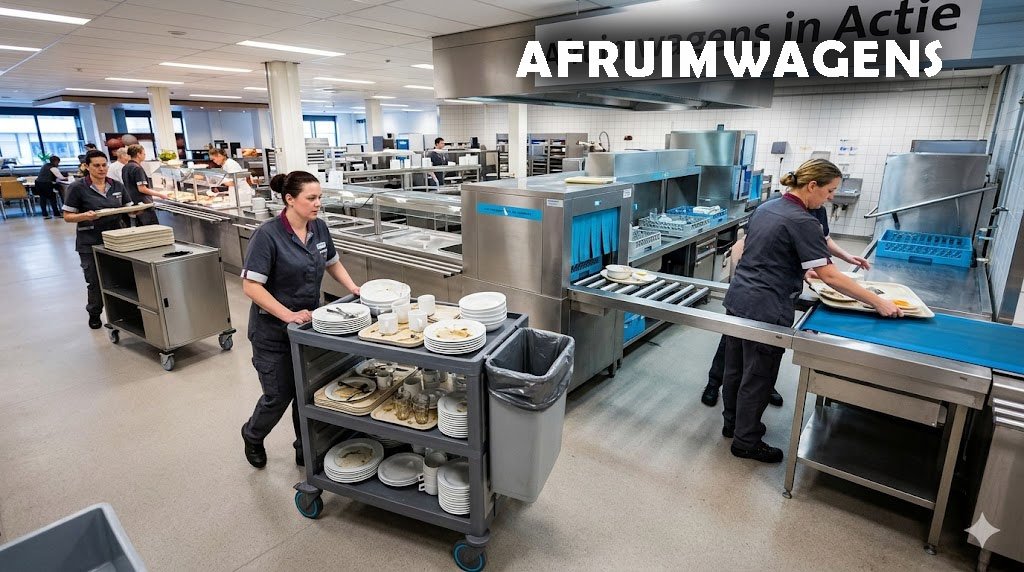
Afruimwagens, also known as clearing trolleys, are mobile carts that help workers in restaurants, hotels, hospitals, and catering businesses collect and move dirty dishes, trays, and waste from tables to the kitchen. The word “afruimwagen” comes from Dutch, where “afruimen” means “to clear” and “wagen” means “cart.” These simple but powerful tools save time, protect staff from injury, and keep dining areas clean and organized. Whether you run a small café or a busy hotel, an afruimwagen can change the way your team works every single day.
What Exactly Is an Afruimwagen?
An afruimwagen is a wheeled cart built for one main job — moving used plates, glasses, cutlery, and waste from dining tables to the dishwashing area. Most models have multiple shelves, strong frames, and smooth-rolling wheels that make it easy to carry heavy loads without much effort. Staff simply load the cart at the table and roll everything back to the kitchen in one trip.
These carts act as mobile workstations too. Many modern afruimwagens include separate sections for sorting cutlery, stacking plates, and holding waste bins. This means items arrive at the kitchen already organized, which speeds up the washing process and reduces mess in the back-of-house area.
How Do Afruimwagens Work in Daily Operations?
In a busy restaurant, waiters often need to clear five or six tables in a short time. Without a clearing trolley, they carry dishes by hand, making several trips between the dining room and the kitchen. An afruimwagen removes this problem. One staff member can load plates, glasses, and leftover food onto the cart and deliver everything to the wash area in a single trip.
The process is straightforward. The staff member wheels the cart to the table, places used items onto the shelves, and separates waste into the built-in bins. Once the cart is full, they push it to the kitchen. This system creates a steady flow of dishes to the washing station instead of sudden, overwhelming batches. Kitchen teams can then clean at a consistent pace, and plates return to service faster.
What Materials Are Used to Make Afruimwagens?
The most popular material for afruimwagens is stainless steel. Stainless steel resists rust, handles moisture well, and stays clean easily. It does not absorb bacteria, which makes it perfect for places where hygiene matters most, like restaurants and hospitals. Stainless steel carts last for years, even with heavy daily use.
The second common option is polypropylene, a high-quality plastic. Plastic afruimwagens weigh less than steel ones, so they are easier to push around. They still meet strict hygiene standards and work well in smaller spaces. Some businesses choose aluminum carts for a balance between light weight and strong build. The best choice depends on your work environment and how much weight the cart needs to carry each day.
Key Features to Look For in an Afruimwagen
When you shop for an afruimwagen, pay close attention to the wheels. Good carts have 360-degree swivel casters that turn easily, even in tight spaces between tables. Look for models with at least two braking wheels so you can lock the cart in place when loading or unloading. Rubber or soft-tread wheels also reduce noise, which matters in fine-dining settings.
Shelving and capacity are equally important. Choose a cart with enough shelves to handle your busiest service times. Adjustable handle heights help staff of different sizes work comfortably without bending or stretching. Rubber bumpers on the corners protect walls and furniture from damage. Some premium models also include noise-dampening materials on the shelves, so plates and glasses do not clatter loudly during transport.
Benefits of Using Afruimwagens
The biggest benefit of an afruimwagen is time savings. Staff clear tables much faster because they carry more items in fewer trips. This speeds up table turnover, which means you can serve more guests during busy hours. Faster clearing also improves the guest experience because no one wants to sit near a table full of dirty dishes.
Afruimwagens also protect your team’s health. Carrying heavy stacks of plates by hand puts strain on the back, shoulders, and wrists. Over time, this leads to repetitive strain injuries that cost money and reduce productivity. A clearing trolley removes most of the heavy lifting and lets staff push instead of carry. This ergonomic advantage keeps your team healthy, reduces sick days, and creates a safer workplace for everyone.
Where Are Afruimwagens Used?
Restaurants and hotels use afruimwagens the most. In restaurants, they speed up the clearing process between courses and at the end of meals. Hotels rely on them for room service, banquet clearing, and buffet management. Large events like weddings and conferences also depend on clearing trolleys to keep service smooth and organized.
However, afruimwagens are not limited to hospitality. Hospitals and care homes use them to transport meal trays to patients and collect used items afterward. School cafeterias and office canteens depend on them during peak lunch hours. Even catering companies use portable clearing trolleys at outdoor events. Any place where people eat and dishes need collecting can benefit from a good afruimwagen.
How to Maintain Your Afruimwagen
Keeping your afruimwagen in good shape is simple but important. Clean the surfaces after every shift with warm water and a food-safe cleaning solution. Stainless steel carts benefit from a quick wipe-down to remove fingerprints and food residue. Check the wheels regularly for hair, string, or food particles that might slow them down or cause squeaking.
Inspect the brakes, bumpers, and shelf joints every month. Tighten any loose screws and replace worn-out casters before they cause accidents. Store the cart in a dry area overnight to prevent unnecessary wear. With basic care, a quality afruimwagen can last ten years or more, making it one of the best long-term investments for any food service business.
Conclusion
Afruimwagens are much more than simple carts on wheels. They save time, protect staff from injuries, improve hygiene, and keep your service running smoothly. Whether you manage a restaurant, hotel, hospital, or school cafeteria, investing in the right clearing trolley pays for itself quickly through faster service and happier staff. Choose a model that fits your space, matches your daily workload, and meets your hygiene standards — and you will notice the difference from day one.
Frequently Asked Questions
1. What does the word “afruimwagen” mean?
“Afruimwagen” is a Dutch word. “Afruimen” means “to clear away” and “wagen” means “cart” or “wagon.” Together, it refers to a clearing trolley used to collect and transport dirty dishes and waste.
2. What is the best material for an afruimwagen?
Stainless steel is the best choice for most businesses because it resists rust, cleans easily, and lasts a long time. For lighter use, high-quality plastic or aluminum carts also work well.
3. Can afruimwagens be used outside of restaurants?
Yes. Hospitals, care homes, schools, office canteens, and catering companies all use afruimwagens. Any place where meals are served and dishes need clearing can benefit from one.
4. How much weight can an afruimwagen carry?
Most commercial afruimwagens carry between 100 kg and 300 kg, depending on the model and material. Always check the manufacturer’s weight limit before loading the cart.
5. How often should I clean my afruimwagen?
Clean your afruimwagen after every shift to meet hygiene standards. Do a deeper inspection of wheels, brakes, and joints at least once a month to keep everything running smoothly.
Get verified insights on News Writer